
Highlights
- OnePlus 15 could launch in India at Rs 72,999.
- In comparison, the OnePlus 13 debuted at Rs 69,999.
- This would mean a price hike of Rs 3,000.
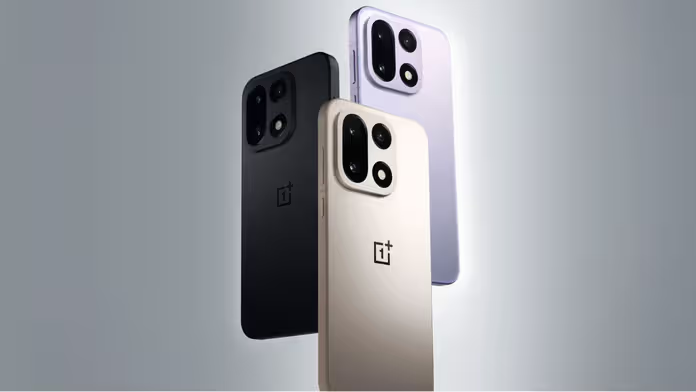
OnePlus 15 is set to launch in India tomorrow as the country’s first smartphone powered by the Snapdragon 8 Elite Gen 5 chipset. The phone introduces a refreshed design with a smaller, minimalist square-shaped camera module and also marks the end of OnePlus’s long-running collaboration with Hasselblad for camera tuning. Since the device has already launched in China, its specifications and features are well-known — the only missing piece was the India pricing.
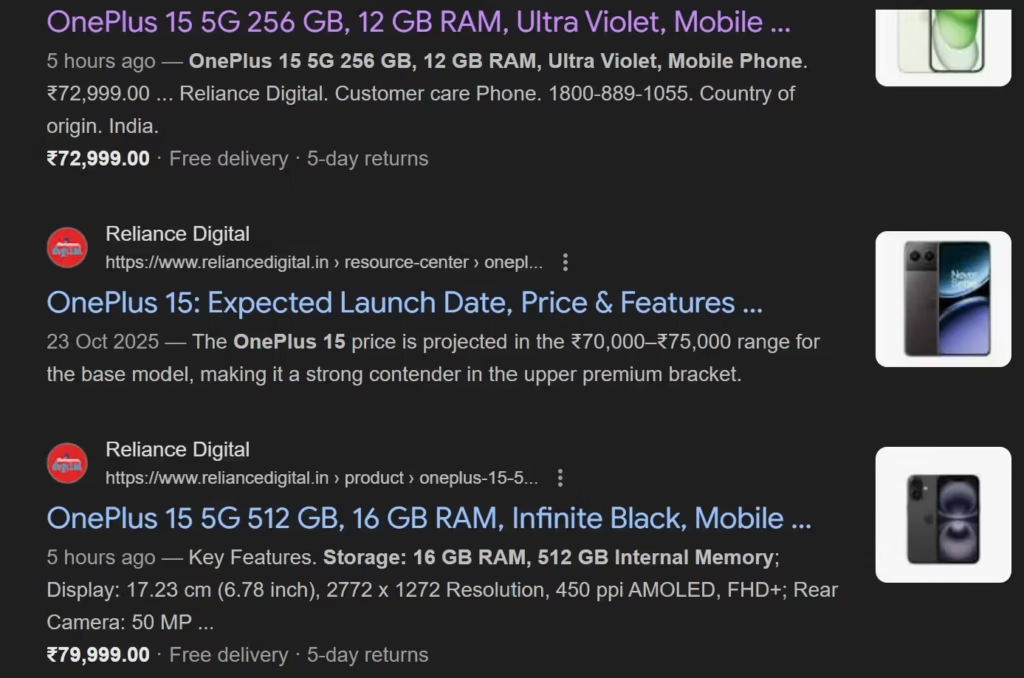
Just a day before the official launch, the price was reportedly leaked through a major retailer. The phone was spotted on Reliance Digital’s website, where it was listed at ₹72,999 for the base variant with 12GB RAM and 256GB storage. A higher model with 16GB RAM and 512GB storage was listed at ₹79,999. Although the listing has since been removed, search results still reveal the leaked pricing details.
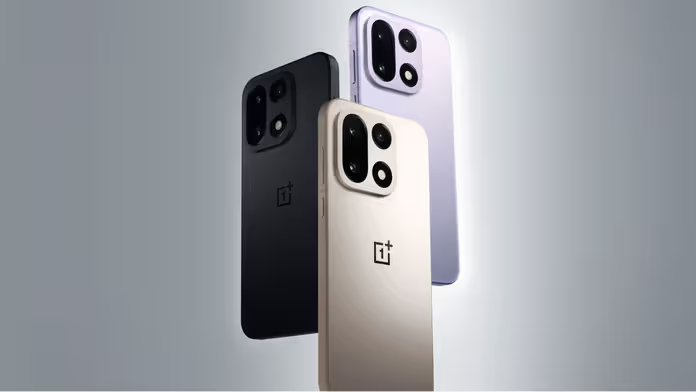
The leaked pricing for the OnePlus 15 suggests that it could cost around ₹3,000 more than last year’s OnePlus 13, which started at ₹69,999 for the base model. This potential price hike doesn’t seem limited to OnePlus alone — similar leaks hint that the iQOO 15 and OPPO Find X9 might also debut at higher prices this year.
While leaks should always be taken with caution until officially confirmed, the trend aligns with a broader industry shift. A recent Money Control report revealed that several smartphone brands, including OPPO, Vivo, Xiaomi, and Samsung, have started increasing prices. The reasons behind this include rising memory costs, supply chain challenges, and the weakening rupee. Xiaomi has also attributed the surge in costs to the growing demand for AI-driven features, which are pushing memory prices higher — a pattern that could continue through 2026.
Some brands have already adjusted their pricing. OPPO increased the prices of its Reno 14 and Reno 14 Pro models by ₹2,000 each, while Vivo raised prices by about ₹500 for its budget-friendly T4x and T4x Lite phones. This points toward a broader market trend where both flagship and mid-range smartphones are becoming more expensive. If OnePlus goes ahead with the higher pricing for the OnePlus 15, other brands will likely follow. Although this might impact sales to some extent, the effect could be moderate since the trend is industry-wide.
The OnePlus 15 itself brings notable upgrades. It runs on Qualcomm’s latest Snapdragon 8 Elite Gen 5 chipset and introduces new gaming technology aimed at delivering a console-like experience with support for up to 165 FPS. It also packs a significantly larger 7,300mAh battery, a big jump from the 6,000mAh unit in the OnePlus 13. However, the camera setup raises some questions this time. With OnePlus ending its partnership with Hasselblad, the phone now relies on its in-house DetailMax image engine. Early reports suggest smaller camera sensors and a slower aperture, which could potentially affect camera quality — though a final verdict will depend on real-world testing.
If the OnePlus 15 does launch at a higher price, it could make the buying decision a bit more challenging for consumers. Still, with its powerful hardware, advanced gaming features, and improved battery life, it remains a promising flagship. Those upgrading from an older phone may find it worthwhile, but OnePlus 13 owners might want to wait for detailed camera reviews before deciding.